


Bead Imports Halted Indefinitely, Local Businesses and Mardi Gras Impacted
- Jaci Pinell

- May 5, 2020
- 3 min read
President Trump’s Chinese tariff and the spread of coronavirus delayed any way for distributor businesses to import beads overseas, accidentally impacting Mardi Gras through throw prices, investing locally and influencing the holiday to be eco-friendlier.
Trump announced in January of 2018 that he would impose a 10 percent tariff on $300 billions of Chinese imports beginning September, but then was delayed until December to avoid impacts on holidays. The tariff included “glass imitation pearls and pearl beads" and "base metal beads," plus toy throws like plush items and light up objects.
Some local businesses braced for the financial effects of fewer or more expensive Mardi Gras throws by stocking up on beads in advance, like Dan Kelly, the president of Beads By The Dozen—one of the biggest local bead distributors.
"I warned everyone to get their bead orders in early once I heard news [of the tariff]. It's a loss of thousands of dollars in profit to local businesses and the krewes who aren't prepared will have higher expenses," Kelly said.
What krewes and businesses did not account for was the combination of the tariff and the coronavirus’ surge that followed shortly after that would prevent bead imports indefinitely.
December 31 of last year, Chinese authorities alerted the World Health Organization of an outbreak of a strain of coronavirus causing symptoms of severe pneumonia first identified in Wuhan, China. The strain, COVID-19, is caused by a coronavirus that studies show may be tied to a wet market.
As of May 5, there’s been 3,489,053 confirmed cases of COVID-19 and 241,559 deaths reported to WHO globally and the recession has been the steepest economic downturn since the Great Depression with widespread layoffs and business closings.
"Nobody saw it coming," Nelson Maddox, Parties Start Here owner said who serves Baton Rouge. "Vendors watched what would happen with the tariff for over a year now, but now the coronavirus has made it even more uncertain for when beads overseas will become available again."
These circumstances, plus rising social movements against Mardi Gras’ bead consumer culture built on waste, labor exploitation, toxic chemicals and the green movement influenced krewe members to consider biodegradable and recycled beads or opting out on beads all together. Bead costs were enough for krewes to consider alternatives years ago.

Baton Rouge’s Mid City Gras is known to promote eco-friendly throws and messages, like the one that said "one truck load of plastic is dumped in our oceans every minute." Krewes will spend about $500 for the average three-hour parade and some spend hundreds of dollars on beads which can normally run anywhere from $25 to $40 per case. It takes about 10 cases of beads to last the entire parade route, Krewe Bohème members said, and beads with krewe emblem are even more costly, which could boost the cost to thousands.
Independent studies show that beads collected from New Orleans parades were found to have toxic levels of lead, bromine, arsenic, phthalate plasticizers, halogens, cadmium, chromium, mercury and chlorine on and inside the beads. Without a way to access beads, locals are ready to retire the 25 million pounds of toxic beads waste thrown yearly.

The Mid City Gras parade held on Feb. 16 replaced motorized floats with bicycle floats and there were sights of recycled wooden deplumes, twisted colored plastic headpieces and unique homemade throws like re-purposed beads, shells and beeswax fire startups. "We don't have any mass bead production facilities near," Maddox said, which makes businesses rely heavily on oversea bead imports. "And if there were, it would be more expensive."
However, some investors are considering funding local biodegradable bead companies, like the biodegradable bead company in New Orleans called BioBeads who is currently finding additional funding for the company's factory projected to open next year.
BioBeads will be manufactured in an exclusive, new custom facility in the New Orleans area as opposed to importing from China and will match or beat current Chinese bead costs, the company's site claims.
Marcus Cyko, BioBeads CEO, said an environmentally friendly Mardi Gras movement is in its infancy, but the global circumstances are going to push it forward.
For a few years now, plastic packaging and beads have been banned for some krewe’s throws. Katrina Brees, Krewe Bohème, Krewe Delusion, and Rex are some Krewes who have gone green in New Orleans. The Intergalactic Krewe of Chewbacchus and Baton Rouge’s Mid City Gras are known for their hand painted, recycled throws.
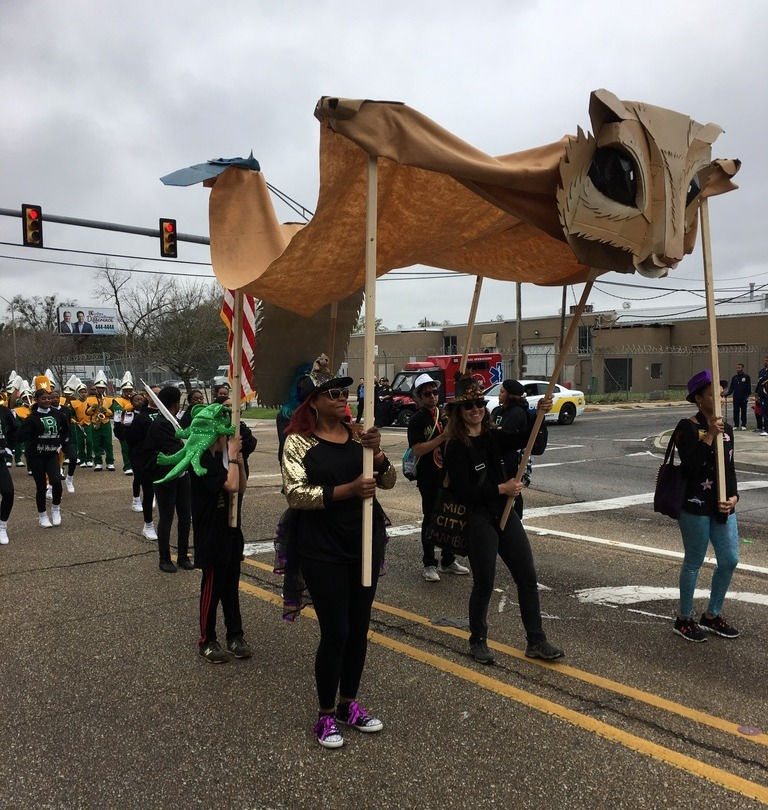
Handmade decorations like the large handmade cardboard squirrel structure shown may become the norm for parades. "Mardi Gras 2021, if applicable, will be a test run of how Louisianans accept their culture to be altered for the benefit of everyone, including the planet," Cyko said about the "ironic" and consequential relationship Mardi Gras has with China.


Comments